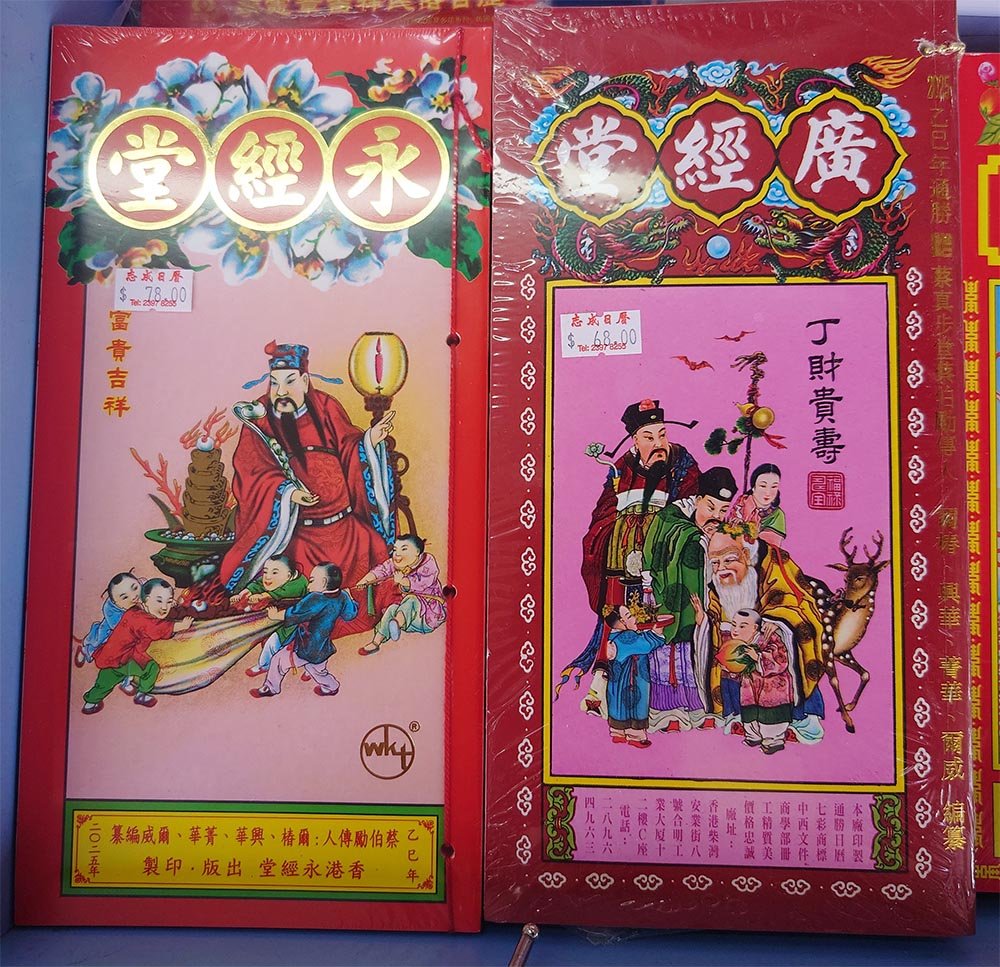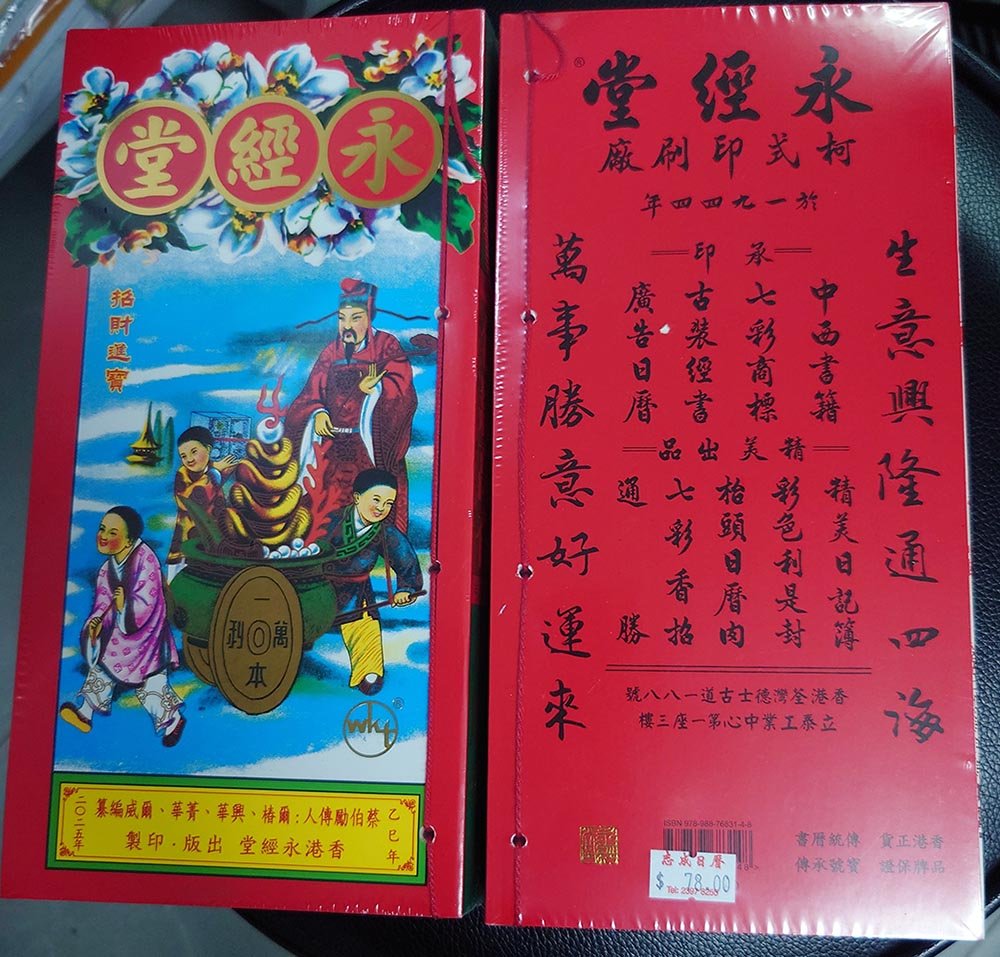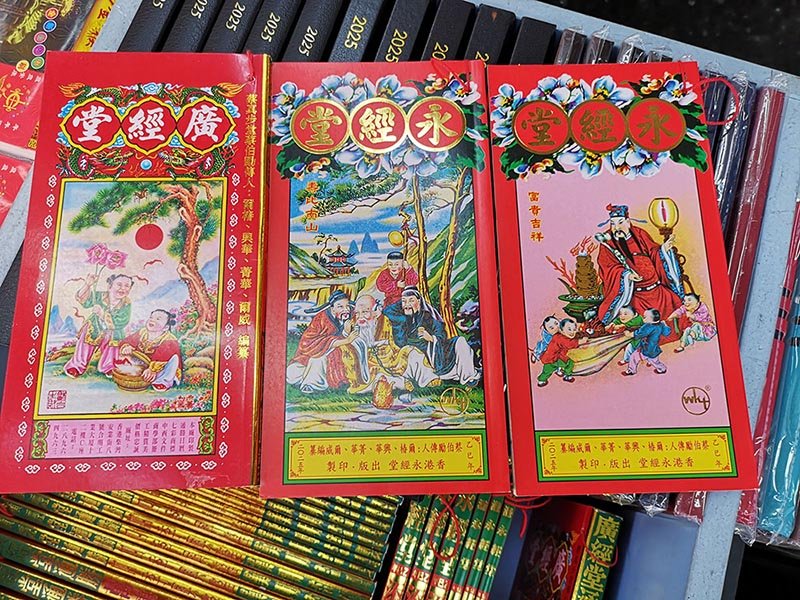

Zhen Bu Tang Tong Shing and Yung King Tong Tong Shing are both popular almanacs in Hong Kong. They are both derived from Cai Zhen Bu Tang's calendar calculations, but published by different publishers.
Zhen Bu Tang Tong Shing
Long History: Founded in Guangzhou by Cai Zuibai in 1891, it has a history of over 100 years. It is one of Hong Kong's most authoritative almanac publishers and has been listed as an Intangible Cultural Heritage.
Family Inheritance: Currently compiled by the descendants of Cai Zuibai — including Mr. Cai Boli's children and fourth-generation successor Cai Xinghua.
Rich Content: Includes astronomical calendars, auspicious and inauspicious daily guidance, and solar term changes. It serves as an important reference for traditional culture and daily life.
Evolution: Originally named "Seven Politics Latitude Selection Tong Shu", it later developed into "Zhen Bu Tang Folk Tong Shing". After 2016, the two books merged and were officially renamed "Zhen Bu Tang Astronomical Calendar Tong Shing".
Publication Method: Cai Zhen Bu Tang is primarily responsible for compiling the calendar, then licenses the rights to different publishers for printing and distribution — such as Guangjingtang and Yung King Tong. This explains why different versions of "Zhen Bu Tang Tong Shing" exist on the market.
Founding Background: Zhen Bu Tang was founded by descendants of Cai Boli, a renowned feng shui master who made deep contributions to almanac compilation.
Content Features: Zhen Bu Tang Tong Shing typically includes daily auspicious and inauspicious guidance, solar term changes, phenological responses, and rich elements of Chinese traditional culture.
Target Readers: Widely appreciated, especially in households that value traditional culture, it is frequently used as a daily life reference tool.
Yung King Tong Tong Shing
Licensed Publisher: Yung King Tong is one of the publishing houses authorised by Cai Zhen Bu Tang to publish the Tong Shing.
Diverse Editions: Yung King Tong publishes many editions such as "All-Encompassing", "Prosperity and New Beginnings", "Fortune, Prosperity and Longevity", and "Everything Goes Well", catering to different readers' needs.
Price Range: Prices vary by edition and point of sale.
Where to Buy: Available at CS Calendar shop, online, or via WhatsApp enquiry.
Founding Background: Yung King Tong is also a long-established Hong Kong brand, specialising in the compilation and publication of the Tong Shing.
Content Features: Yung King Tong Tong Shing includes daily auspicious and inauspicious guidance and offers a modern simplified portable edition suitable for younger readers and busy urban dwellers.
Market Demand: Yung King Tong's almanac sells well in both Hong Kong and overseas markets, particularly around the Lunar New Year when many purchase it as a good luck item.
Relationship Between the Two
Cai Zhen Bu Tang provides the calendar data, while Yung King Tong handles printing, design and distribution — the two operate as partners.
The "Yung King Tong Tong Shing" seen on the market is actually produced based on Cai Zhen Bu Tang's calendar data.
Although the names differ, the core content is the result of Cai Zhen Bu Tang's calculations.
The Tong Shing still holds an important place in Hong Kong society, with many people consulting it to choose auspicious dates and avoid misfortune.
With modern technology, the Tong Shing is now also available in digital editions and mobile apps for convenient everyday use.
Besides Zhen Bu Tang and Yung King Tong, other publishers such as Guangjingtang and Jubaolou also offer almanacs — readers can choose according to their own preferences.
Frequently Asked Questions — Tong Shing Editions, Publishers and Digital Versions
-
Q: What is the difference between Guangjingtang, Wing King Tong, Yung King Tong, Jubaolou, and Zhen Bu Tang Tong Shing?
A: These names refer to different publishers or lineage schools that publish their own editions of the Tong Shing (Chinese almanac). For example, Guangjingtang and Yung King Tong / Wing King Tong may share the same traditional calculation methods (such as the Cai family lineage) but are printed by different publishers, with differences in layout, naming, and supplementary content such as auspicious date selection tables, solar term charts, and symbol explanations. Jubaolou and Zhen Bu Tang are separate brand editions. Always check the cover or copyright page for the editor and licensing information before purchasing.
-
Q: What is the difference between Guangjingtang Tong Shing and Yung King Tong Tong Shing?
A: The main differences lie in editorial choices, layout, and publishing authorisation. While both may be based on similar traditional almanac calculations, the two editions differ in their daily auspicious and inauspicious listings, date selection details, and appendices such as lunar calendar conversion tables and Heavenly Stems and Earthly Branches explanations. If you need precise date selection guidance, compare the table of contents or sample pages of the specific year's edition before purchasing.
-
Q: How can I get or download the Guangjingtang Tong Shing 2026 PDF or other digital almanac editions?
A: Official digital editions are usually released by the publishers or their authorised distributors. Legitimate ways to obtain them include purchasing from the publisher's official website, authorised online retailers, or major e-book platforms. Unauthorised PDF downloads carry legal risks and may infringe copyright. It is recommended to purchase through official and authorised channels only.
-
Q: Which Tong Shing is the best? Where can I buy one in Hong Kong?
A: There is no single "best" edition — the right choice depends on your personal needs. If you prefer a version with recognised traditional authority, look for editions with clear official authorisation from the Cai family tradition. If you prefer a modern, simplified layout, editions from Yung King Tong or Wing King Tong offer more streamlined annotations. Common purchasing locations in Hong Kong include Taoist and folk religion shops, cultural bookstores, and major online retail platforms.
-
Q: What versions of the 2026 Tong Shing are commonly available?
A: Common editions include: standard paperback Tong Shing (varies by publisher), pocket or mini editions (such as compact 6x12cm versions), digital editions or PDFs (subject to publisher authorisation), and English or bilingual editions (offered by select publishers). In Hong Kong, the almanac is commonly sold at Taoist shops, cultural bookstores, and major online retailers, with increased stock available around the Lunar New Year period.
-
Q: What are the special features of Tong Shing editions by Cai Baili, Cai Boli, or Cai Xinghua for date selection?
A: Authors associated with the Cai family lineage — such as Cai Baili, Cai Boli, and Cai Xinghua — are typically connected to the Zhen Bu Tang tradition or its descendants. Almanacs published under these names generally emphasise traditional date selection methods, detailed use of time periods and solar terms, and family-inherited calculation systems. It is recommended to read the author biography and sample chapters to determine whether the edition suits your date selection needs.
|
|
About the AuthorBenny Mak is a third-generation member of CS Stationery, with over 20 years of experience in stationery wholesale and retail in Sham Shui Po. He specialises in stationery procurement, printing, and office supplies consulting for SMEs in Hong Kong. |